Advanced Biomechanics
The physics of motion in water sports. Understanding the kinetic chain allows you to optimize force output, reduce fatigue, and prevent injuries.
1.1 SUP Biomechanics
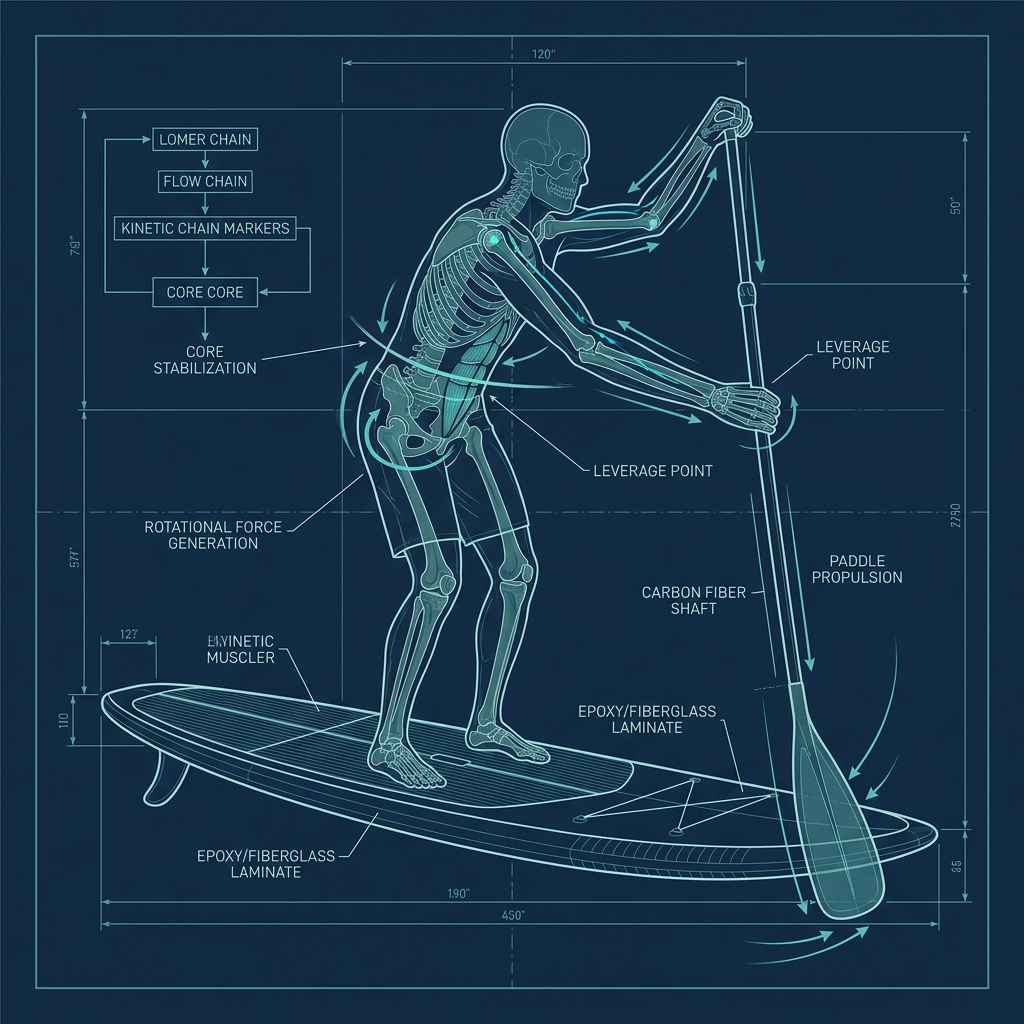
Analyze the Kinetic Chain in Paddling from core to paddle blade. The stroke relies on power transfer during the "Catch, Pull, and Release" phases.
1.2 SURF Biomechanics
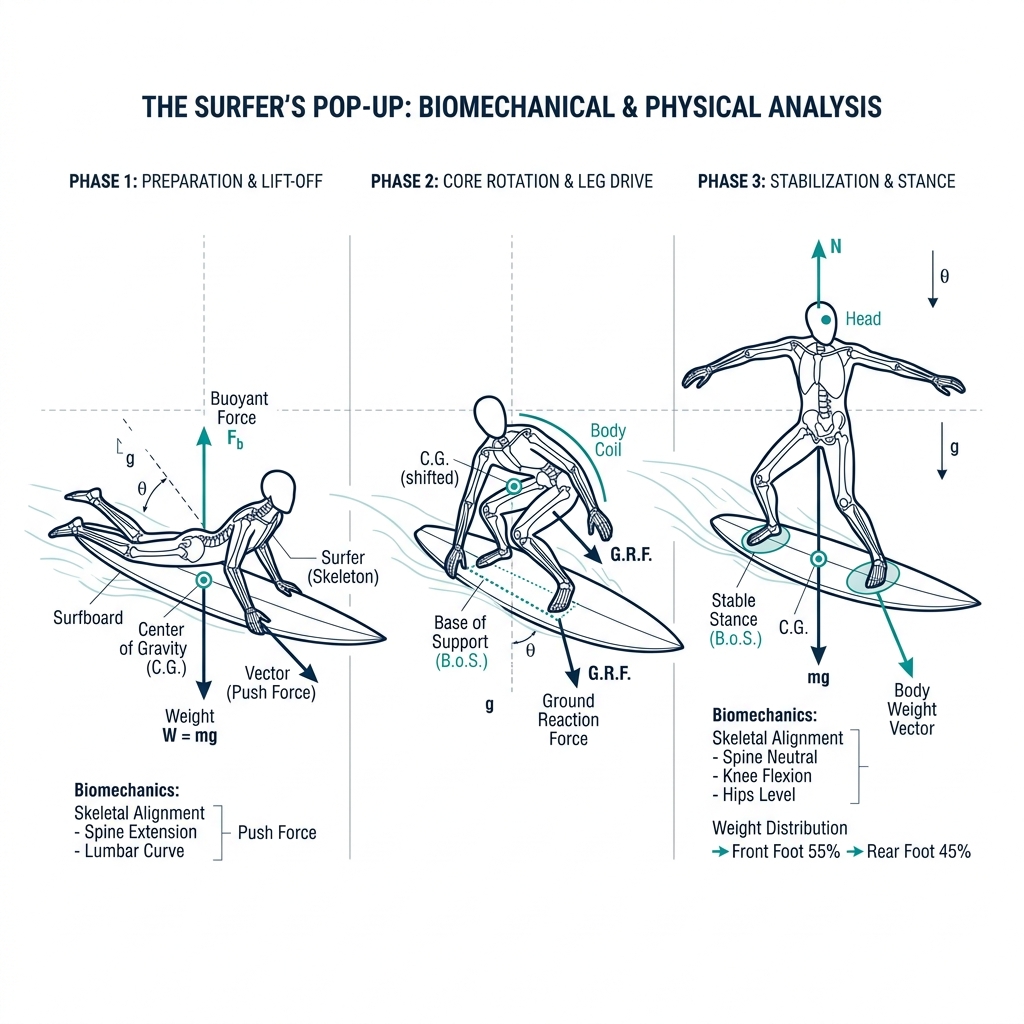
The "Pop-up" mechanics and weight distribution for carving rely heavily on understanding the center of gravity versus Buoyancy Control.
Subconscious Mechanisms
The mind-body connection in extreme environments. Explore how the human body adapts to pressure and the neuroplasticity of muscle memory.
-
2.1 Underwater Physiology
The Mammalian Dive Reflex is triggered by cold water on the face, causing bradycardia (slowing of the heart rate) and blood shift (peripheral vasoconstriction) to protect vital organs under pressure.
-
2.2 Gas Exchange (CO₂ & O₂)
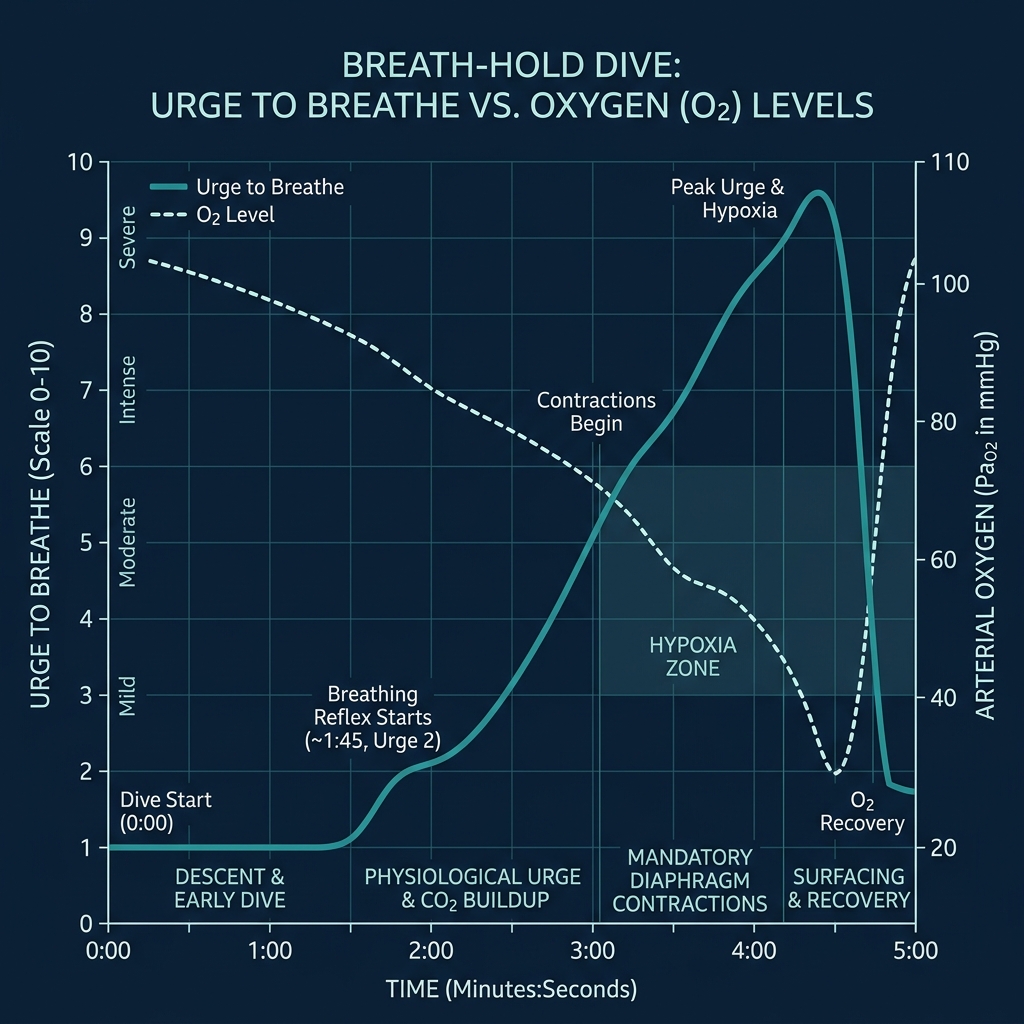
During breath-holding, the "Urge to Breathe" is primarily driven by CO₂ tolerance, not an immediate lack of O₂. Training focuses on managing this psychological urge while conserving oxygen.
-
2.3 Muscle Memory
Neuroplasticity in water sports allows repetitive technical drills to become subconscious reactions. In high-pressure ocean environments, this automaticity is crucial for safety and performance.
Supplementary Training
The Conditioning Hub provides targeted exercises and protocols to build the necessary strength, mobility, and recovery for peak aquatic performance.
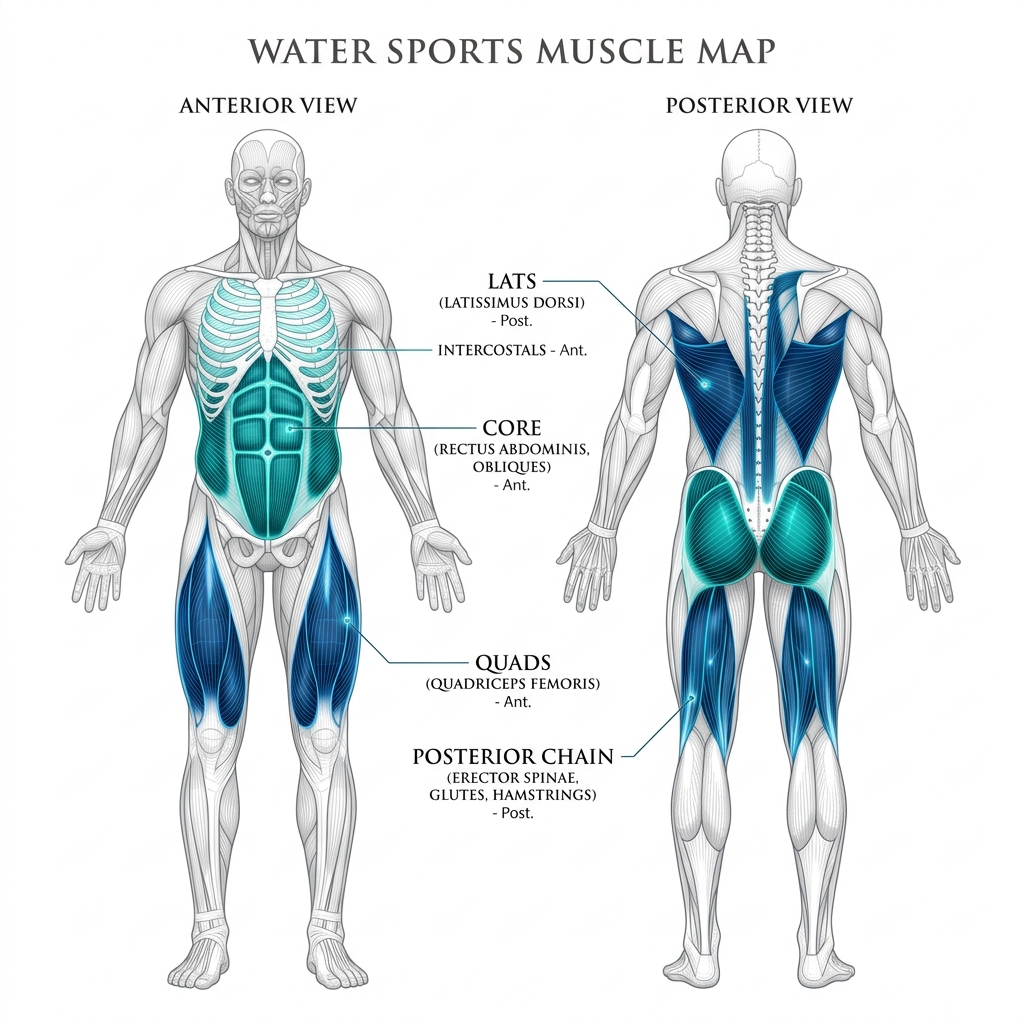
Understanding which muscles are primary drivers in each discipline helps tailor your conditioning.
- SUP: Latissimus Dorsi, Core (Obliques, Transverse Abdominis)
- SURF: Quadriceps, Posterior Chain (Glutes, Hamstrings)
- FREEDIVE: Intercostals, Diaphragm
Dynamic stretching increases blood flow and prepares the neuromuscular system.
SUP & Surf (Shoulder & Hip Focus)
- Arm circles and torso twists (2 mins)
- Walking lunges with rotation (2 mins)
- Deep squats and hip openers (2 mins)
Freediving (Thoracic Mobility)
- Empty lung stretches (Diaphragm)
- Rib cage expansions (Intercostals)
Strength exercises specifically designed to improve paddle power and breath-hold stability.
- Explosive Pull-ups: Mimics the power phase of the SUP stroke.
- Medicine Ball Rotational Throws: Builds core rotational power.
- Box Jumps: Enhances explosive leg power for surf pop-ups.
- Apnea Walks: Walking while holding breath to simulate O2 deprivation and build CO2 tolerance.
Post-activity static stretching to prevent injury and promote muscle longevity.
- Pigeon Pose: Opens tight hips after long paddling sessions.
- Child's Pose to Cobra: Stretches the lats and mobilizes the spine.
- Foam Rolling: Focus on the IT band, quads, and lats to release myofascial tension.
Local Oceanography
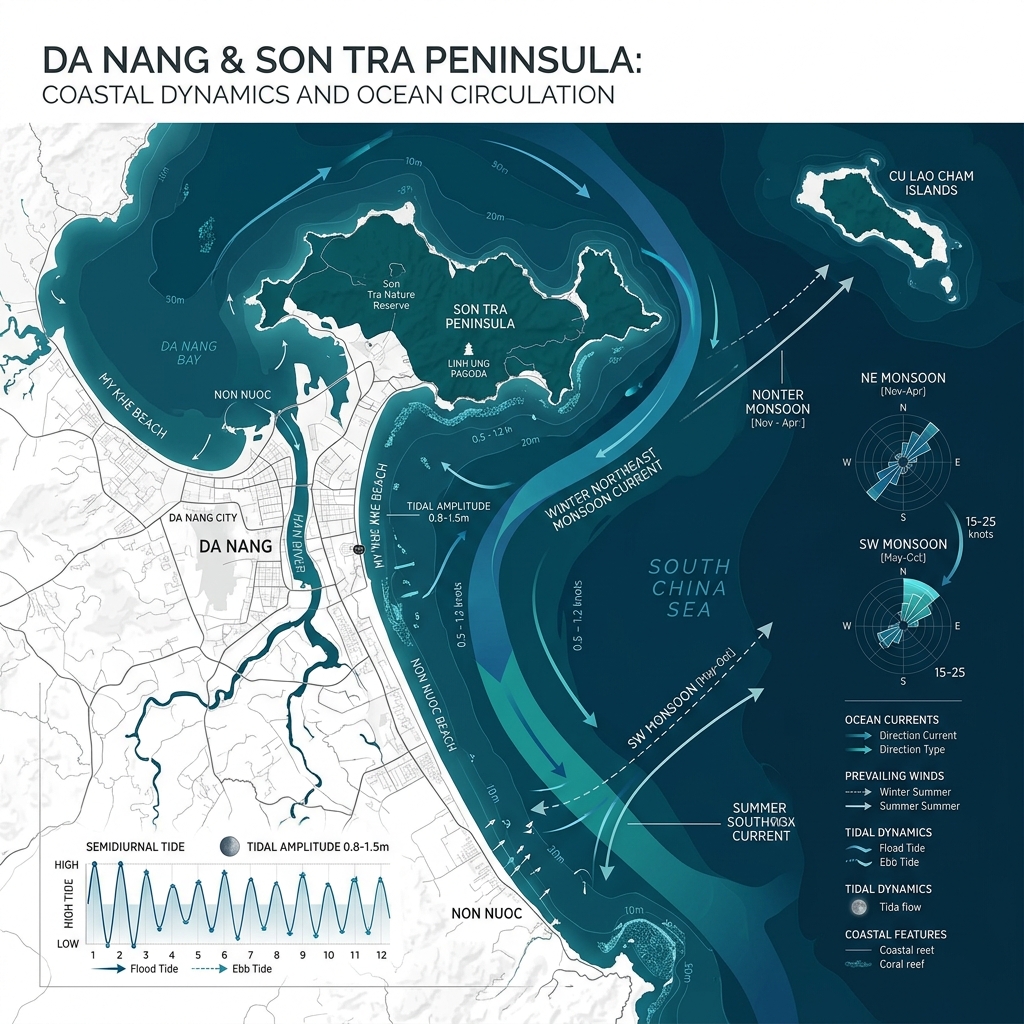
Da Nang specific dynamics. Understanding monsoon patterns, topography, and marine ecosystems.
-
4.1 Monsoon Dynamics
The Northeast (Bắc) monsoon brings powerful, cold swells ideal for advanced surfing, while the Southwest (Nam) monsoon offers calmer, glassy conditions perfect for SUP and freediving.
-
4.2 The Son Tra Influence
The Son Tra Peninsula acts as a natural barrier and wave refractor. This geography creates unique micro-climates, providing sheltered bays even when the open ocean is rough.
-
4.3 Spot Guide
Hon Sup: Ideal for Freediving and clear-water SUP during the dry season.
Bai Nam: Sheltered bay, great for SUP beginners year-round.
My Khe: Exposed beach break, prime for surfing during the winter swells. -
4.4 Marine Ecosystem
Da Nang’s marine life relies on delicate coral health. We advocate for strict conservation practices, emphasizing "look but don't touch" to preserve these habitats for future generations.